A Missing Prime Minister Is the Antihero of Beirut’s Marathon
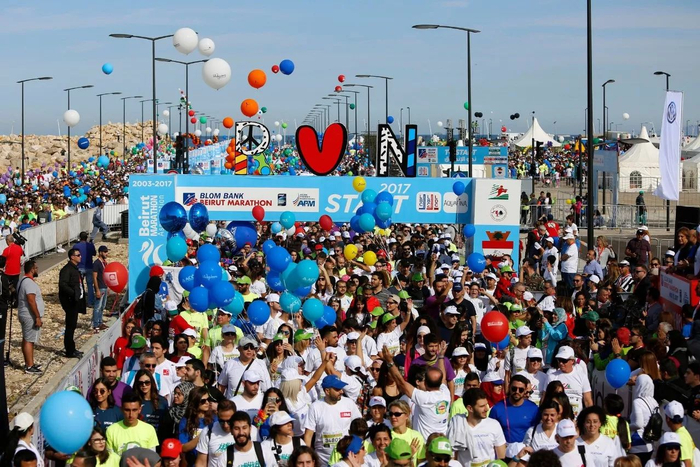
BEIRUT, Lebanon — Every November, I walk downtown with my husband and children through the holiday hush of streets closed for theannual Beirut Marathon。 We pass Ottoman-era villas with arched windows, a Versace-branded glass tower and the bullet-pocked hulk that was a Holiday Inn until the Battle of the Hotels in the 1970s。 We wave at the soldiers still stationed there, and at the teenage volunteers waiting to pass out water。
黎巴嫩贝鲁特。每年十一月,我都和丈夫孩子步行进城,穿过因贝鲁特马拉松赛而封闭的街道,享受一片假日的宁静。我们穿过奥斯曼时代的拱顶窗别墅,一栋有范思哲广告的玻璃幕墙大厦和布满弹孔的船体,七十年代“酒店战斗”前这里曾被用作旅馆。我们向仍在那里站岗的士兵挥手,向等着发水的少年志愿者打招呼。
As a symbol of Lebanese resilience, the 15-year-old marathon is a bit of a cliché, like the list of Beirut contrasts — war-torn glitz, trauma alongside normalcy — above。 The race’s explicit insistence on defying divisions and violence can have a whiff of protesting too much。 And yet。 When we reach the starting line and crowd into the corral to begin the Family Fun Run, it is impossible not to be moved。
作为黎巴嫩恢复常态的标志,举行了十五年的马拉松赛有点说烂了,就像贝鲁特的鲜明对比——战争蹂躏后的浮华和与正常生活并存的创伤。比赛要反对分裂和暴力,这可能让人感觉抗议过头了,实际并非如此。当我们到达起跑线,挤进人群准备开始家庭趣味跑时,不可能不被感染。
There are balloons and Lebanese flags and people from every religion, class and political faction。 The sense of community is literal; in this smallish city, where I have lived for five years with my family as the Beirut bureau chief of The New York Times, we inevitably find ourselves running alongside friends from school and work。
这里有气球、黎巴嫩国旗和各种宗教、阶层和政治派别的人。团结感真真切切:作为《纽约时报》贝鲁特站记者,在这个我和家人住了五年的小城市,不可避免,我们会和学校及单位的朋友一起参加跑步。
Some clichés are true: Holding a marathon in a place that many outsiders, a generation after Lebanon’s 15-year civil war, still picture as a dangerous wasteland does count as an act of hope.At the starting gun of each race, an announcer shouts in Arabic, English and French: “We run for peace! For unity! For Lebanon!”
有些老话说得没错:黎巴嫩长达15年的内战结束后已经过去一代人了,许多外人仍然将这里看做危险的荒原,在这里举行一场马拉松赛的确算得上充满希望的事。每次比赛发令枪响起,宣布者都用阿拉伯语、英语和法语喊:“为了和平而跑!为了团结而跑!为了黎巴嫩而跑。”
Once we start running, the race can be as much a tour of Lebanon’s problems as an antidote to them。 Even the truncated 1K route that I jog with my 7-year-old takes us through the downtown that became a shattered no-man’s-land during the civil war。
我们开跑了,比赛既是黎巴嫩问题的解药,也展示了这些问题。即便我和7岁的孩子慢跑了短程1千米,这段路就能让我们穿过城区,城区在内战中成了无人居住的一片废墟。
It was rebuilt, controversially, as a playground for the wealthy, under Rafik Hariri, a former prime minister who symbolized unity to some and corruption to others。 The race ends up at Mr。 Hariri’s tomb; he was killed in 2005 in a bombing that roughly half the country blames on the powerful militia and political party Hezbollah, and the other half insists was a setup。
具有争议的是,在前总理拉菲克·哈里里的主持下,城区被重建为富人的游乐场,哈里里在有些人眼中象征团结,在另外一些人眼中则代表着腐败。比赛在哈里里先生墓结束。他2005年在一次炸弹袭击中被杀,大概一半国人指责强大的民兵和真主党制造了惨案,另外一半坚称纯属陷害。

The reporter’s husband and son greeting family and friends as they run the eight-kilometer race at the Beirut Marathon.Carla Huijer Shehadi
Yet at this year’s races, on Sunday, the vision of unity carried new weight。 The reason was a surprising one: a call for the return of Prime Minister Saad Hariri — Rafik’s son — from Saudi Arabia。 He is no more a universally beloved figure than his father was。
但在今年的比赛中,一个周日,团结的愿景有了新的意义。理由令人吃惊:呼吁拉菲克的儿子、总理萨阿德·哈里里从沙特归来,他可没有父亲那么广受爱戴。
But it was the eighth day since heunexpectedly declared his resignationfrom the Saudi capital, Riyadh。 He remainsstranded there, widely seen as a captive, literally or figuratively, of his Saudi patrons,a pawnin their efforts to isolate their regional rival, Iran, and its ally, Hezbollah。 (Heinsisted he was “free”in a televised interview。)
但他出人意料的在沙特首都利雅得宣布辞职后的第八天,他仍然困在那里,被外界视作沙特保护人的囚徒,无论实际状况或是象征意义上都是如此,成为沙特人质,用来孤立地区对手伊朗和其盟友真主党。(他接受电视采访时坚称自己是“自由”的。)
译注:11月21日,宣布辞职的哈里里已乘专机返回贝鲁特。
When Lebanese politicians declared the marathon a rally for Mr。 Hariri’s return, I expected mass rolling of eyes。 An axiom of marathon day is that it is a time to set aside politics。 But when young men handed out baseball caps reading, “We want our PM back,” many runners put them on。
黎巴嫩政客宣布马拉松比赛呼吁哈里里归来,我估计招致不少白眼。马拉松日的原则是摒弃政治的时刻。可当年轻人分发棒球帽,上面写着“我们想让总理回来”时,许多跑步者戴上了帽子。
Billboards showed Mr。 Hariri running in last year’s race with the slogans, “We are all waiting for you” and “Running For You。” People snapped selfies with them。 Other signs displayed an Arabic hashtag, #WeAreAllSaad。
布告牌显示,哈里里先生去年参加比赛,打出口号说“我们都在等着你”和“为你而跑”。人们同他合拍,还有标语用阿拉伯文标签说#我们都是萨阿德。
It was not that people had forgotten that Mr。 Hariri presides over a weak government and has failed to win concessions from Hezbollah through confrontation or compromise。 Nor had they abandoned the widespread conviction that he and his rivals play on sectarian divisions to keep power and wealth concentrated in the hands of a tiny, largely hereditary political elite。
并非人们忘了哈里里的政府羸弱不堪,无论通过对抗或是妥协,都未能让真主党做出让步。人们也并未改变观点,依然认为他和他的对手利用派系分裂维持权力和财富,而财富只集中在一小撮主要为世袭的政治精英手中。
It was just that enough was enough。 Generations of foreign meddling aside, the belief that another country had effectively kidnapped Lebanon’s prime minister was the last straw, and people wanted to see the move backfire。 As one commenter put it on Twitter, Lebanon was tired of outside powers acting like it was “not a real place。”
问题不过是这也太过分了。且不说持续多年的外国干预,另外一个国家可以事实上绑架黎巴嫩总理,这种观点是最后一根稻草,人们想要反击了。正如一位评论员在推特上说,黎巴嫩厌倦了外部势力的所作所为,好像黎巴嫩“不存在”。
Somehow, a humiliating moment for Lebanon became an occasion for national unity, even pride.Lebanon’s most earnest slogans are often their own parodies。 A perfect example is the hashtag #LiveLoveLebanon, invented by the Ministry of Tourism。
出人意料,黎巴嫩屈辱的时刻成为民族团结甚至自豪的机会。黎巴嫩最热忱的口号常常是自创的打油诗。一个完美的例子是标签#LiveLoveLebanon,这是旅游部提出的。
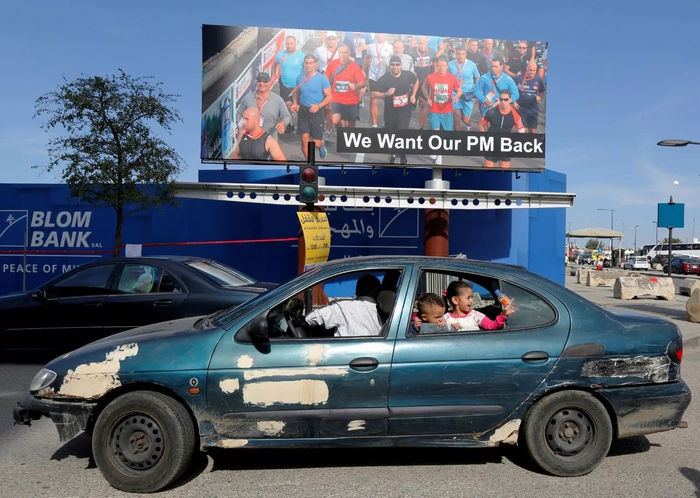
A billboard depicting Lebanon’s Prime Minister Saad Hariri, who has resigned, during the annual Beirut Marathon.Jamal Saidi/Reuters
Lebanese social media users quickly embraced it to comment on the country’s beaches (and their scent of sewage), its ski slopes (and mountainside garbage dumps), its wine industry (and hash factories), its swanky (and overcharging) restaurants and its cedar forests (what’s left of them) dating to the Song of Solomon。
黎巴嫩的社交媒体用户很快传开了,用来形容国家的海滩(以及污水的味道)、滑雪道(以及上边的垃圾堆)、红酒业(以及大麻工厂)、时尚(价格不菲)的饭店和现存的雪松林,森林可以追溯到雅歌时代。
The hashtag is used in posts about the country’s resilience and diversity in the face of efforts to divide it from within and without, and also to tag anecdotes about petty corruption and glacial internet speeds。
标签用来表达内部外部都有人想分裂国家时,其表现出来的韧性和多样性,也用来揶揄微腐败和冰河时代的因特网速度。
Even to his mostly Sunni constituents, Mr。 Hariri has never matched his father’s charisma or effectiveness。 One telling image, a faded poster on a road in the Bekaa Valley, shows him dwarfed by a translucent likeness of his father, a more imposing figure with a much more regal mustache, looming behind him。
即便对多数逊尼派人口而言,哈里里先生也比不上父亲的魅力或手段。贝卡谷地一条路上褪色的海报很说明问题,海报下面父亲的相貌同他相似,但比他威武多了,小胡子很有范儿。
It reminds me of Patrick Swayze’s spirit in the movie “Ghost,” hovering vaporously behind Demi Moore at her potter’s wheel。
这让我想到派屈克·史威兹在电影《第六感生死恋》中漂浮在黛米·摩尔的陶工转盘后的灵魂。
Yet the fact that Mr。 Hariri’s current predicament is seen by many Lebanese as somehow pathetic has not stopped him from becoming a symbol of Lebanese sovereignty。 Even the flood of new jokes at his expense do not contradict the point。
许多黎巴嫩人认为哈里里现在的困境悲哀,可这一事实并未阻止他成为黎巴嫩主权的象征。就算又来了一拨拿他开涮的段子,也没有压倒这一点。
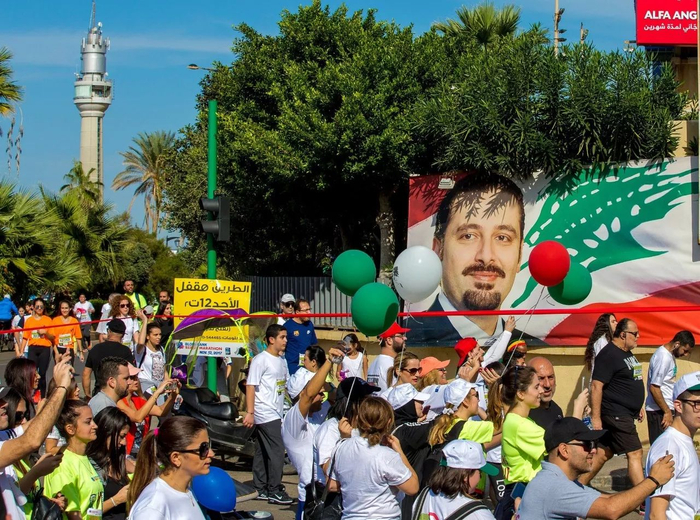
A billboard bearing a portrait of Mr。 Hariri with Arabic words reading, “We are all with you。”Nabil Mounzer/European Pressphoto Agency
Anglophone Lebanese cannot stop playing on “Saad” and “sad。” Journalists have drawn half-joking parallels to the disappearance of Moussa Sadr, the Lebanese Shiite leader who disappeared in Libya, believed kidnapped, in 1976。
会说英语的黎巴嫩人难免把“Saad”说成“Sad”。记者半开玩笑地类比穆萨·萨德尔的失踪,萨德尔是黎巴嫩什叶派领导人,1976年在利比亚失踪,被认为遭到绑架。
After our race, my daughter and I followed some friends, fellow runners, to a cafe at Zaitounay Bay, a seaside development where dozens of gleaming, rarely used yachts are anchored。 It is just the kind of glitzy privatization of public space that gets both celebrated and lampooned with the #LiveLoveLebanon hashtag, and an emblem of angst over the elder Hariri’s redevelopment strategy。
比赛之后,女儿和我跟着一些朋友、跑友去了Zaitounay海湾,这里停泊了有数十条崭新的、很少使用的游艇。这种公共区域的豪华化、私人化被#LiveLoveLebanon标签赞颂和抨击,成为老哈里里的“再开发战略”引人焦虑的符号。
Our friend Imad Shehadi, who grew up watching his father run an emergency room in wartime Beirut and is no fan of politicians, explained over breakfast why the marathon meant more this year。
我们的朋友伊马德·什哈蒂从小看着父亲在战时运营一家急诊室,对政治不感冒,他在吃早餐时解释了为什么今年的马拉松意义更大。
“It’s a mark of defiance against the forces of evil, against the forces on every side that want to interfere with Lebanon,” he said。
“这是反对邪恶力量的标志,反对想要干预黎巴嫩的各方力量,”他说。
“To me it’s more resilience,” his wife, Carla Huijer Shehadi, said。 “The resilience of Lebanon and the Lebanese, who just want to live life, no matter what。”
“对我而言,这更多表现了不屈不折,”他的妻子卡拉·什哈蒂说。“黎巴嫩和黎巴嫩人民不屈不折,他们只想要生活,不管其他。”
We strolled home along the boardwalk, their boys and my daughter stopping to admire a lavish boat christened “Thanx Dad 4。” We passed the spot where Rafik Hariri’s motorcade was blown up。 We followedthe marathon routealong the seaside corniche, past snack bars and fishermen and picnicking families, toward the place where the American Embassy stood before it was bombed in 1983。
我们沿着步道走回家,他们的儿子们和我的女儿停下来赞叹一艘豪华的船,上面标着“Thanx Dad 4”。我们走过拉菲克·哈里里的车队爆炸的地方。我们沿着滨海路的马拉松路线,穿过小吃店,沿路有渔民和野餐的家人,走向曾经的美国大使馆,1983年大使馆被炸。
The racecourse went past several civil war massacre sites and refugee camps and the vibrant neighborhoods that cluster at either end of a city no longer physically divided。 Waiters at our favorite cafe, exiles from today’s war in Syria, high-fived passing runners。 Near the finish line, a booth offered manicures to a subset of joggers in sequined velour。
赛道穿过多个内战屠杀地、难民营和繁华的居民区,居民区分布在城市各处,不再被物理分割开。我们最喜欢咖啡馆里的侍者是从今天还在打仗的叙利亚流亡过来的,他们同经过的跑步者击掌。在终点线附近,一个货摊用亮片闪闪的丝绒给一些跑步者修指甲。
The marathon winner set a course record, anda blind man finished the course for the first time。 In the end, 47,000 people took part。 It was another Beirut record。
马拉松胜利者破了纪录,一位盲人第一次完成比赛。最后,47000人参加了比赛。这是贝鲁特的另一项记录。
文/英文联播
本文作者系新浪国际旗下“地球日报”自媒体联盟成员,授权稿件,转载需获原作者许可。文章言论不代表新浪观点。